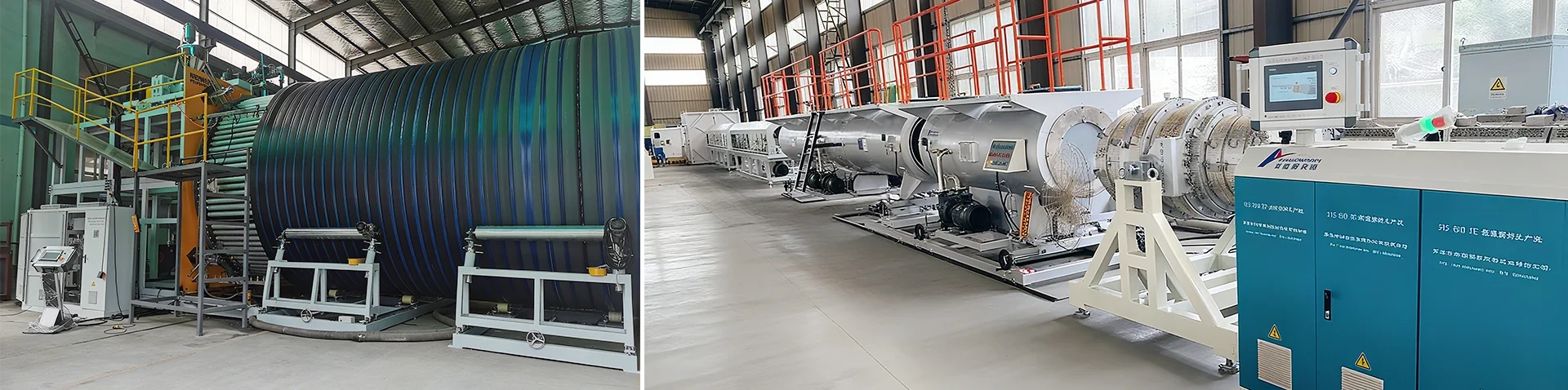
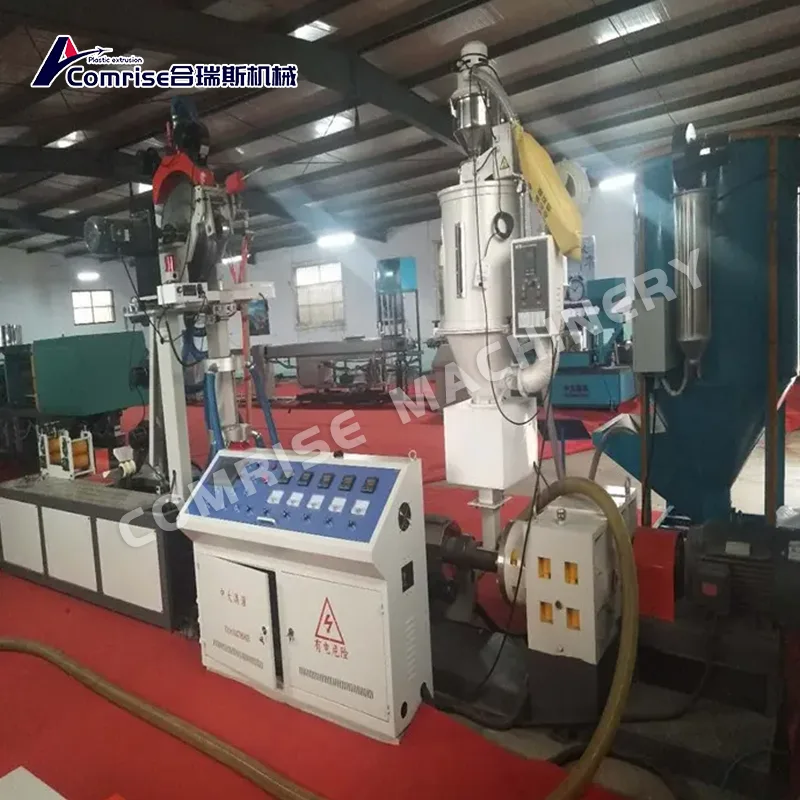
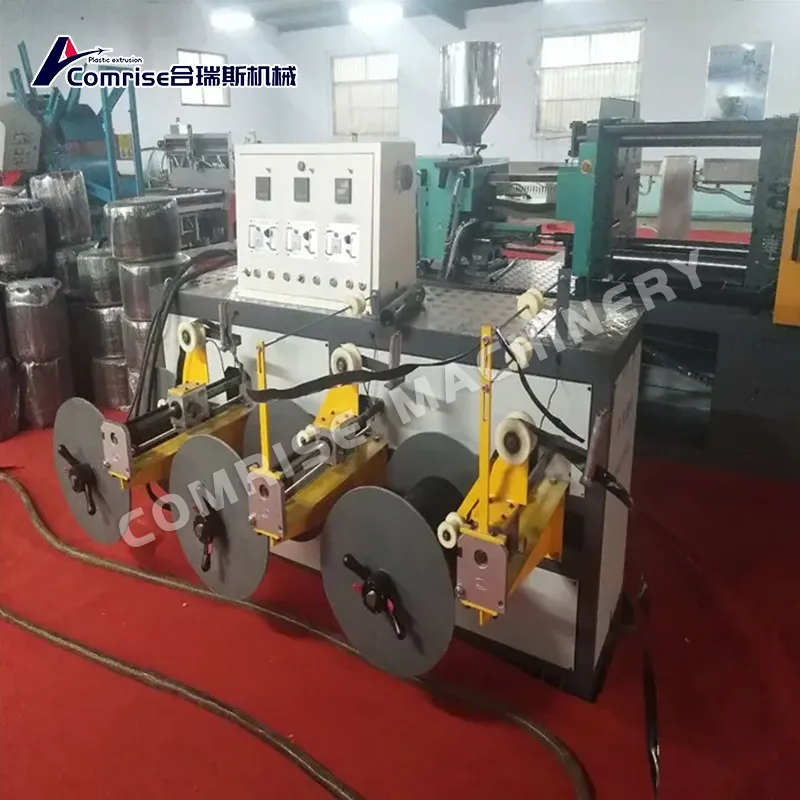
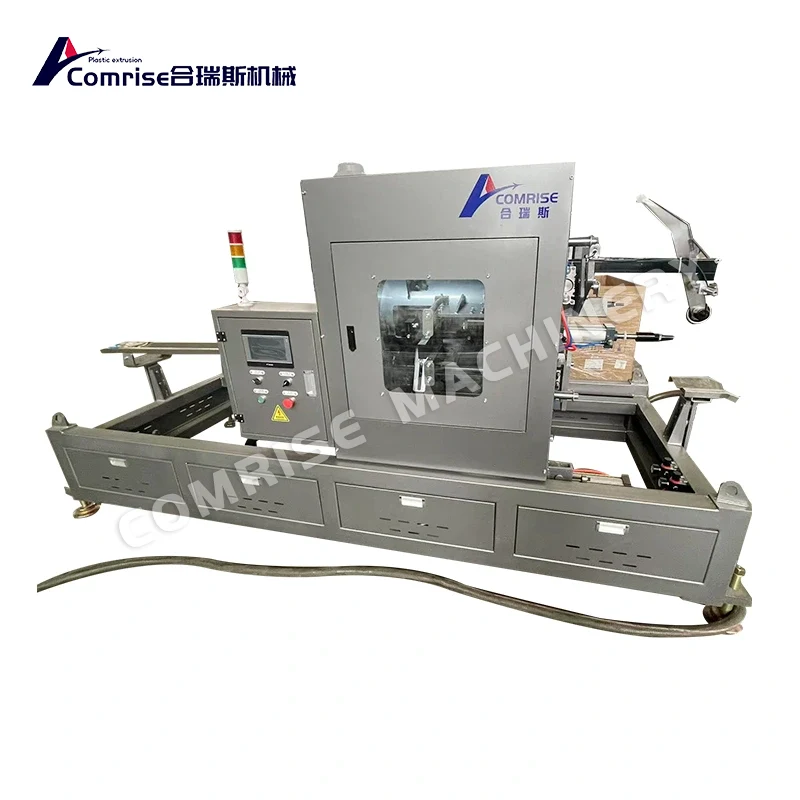
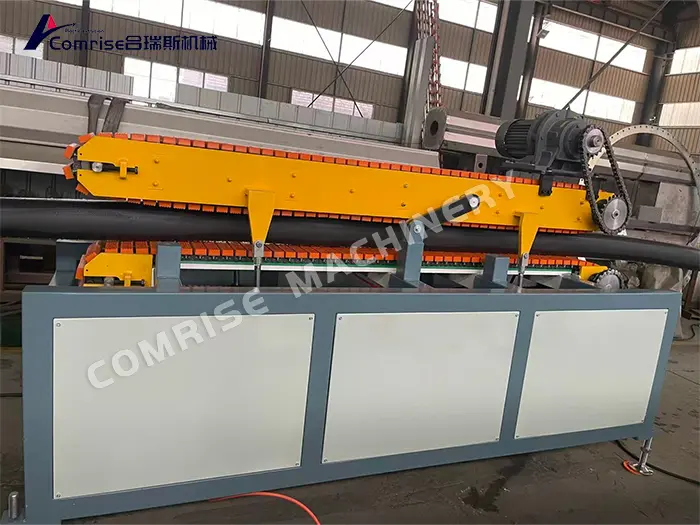
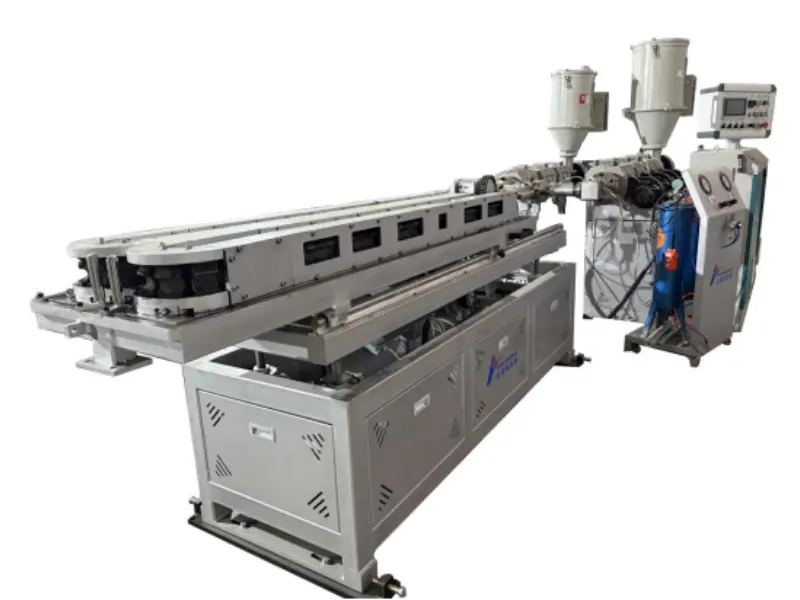
As a professional Agricultural Drip Irrigation Pipe Machine manufacturer in China, Comrise would like to provide you Labyrinth Drip Irrigation Pipe Machine, which is formed by shaping the PE tube and its internal flow channel in the same production process. It combines extrusion, negative-pressure labyrinth forming, cooling, punching, traction, and winding to produce embedded labyrinth drip pipes without separate dripper insertion.
Product Advantages
1. Integrated Labyrinth Structure
The flow channel is formed directly in the PE pipe wall, eliminating the need for separate dripper insertion.
2. Controlled Water Distribution
The internal labyrinth structure creates a longer water-flow path for controlled water discharge along the irrigation line.
3. Consistent Pipe Forming
The extrusion, sizing, and cooling sections work together to maintain stable pipe dimensions and wall thickness.
4. Continuous Production
Extrusion, forming, punching, traction, and winding are integrated into one production line, reducing intermediate handling.
5. Flexible Irrigation Layout
Pipe specifications, outlet spacing, and other production parameters can be configured according to the required irrigation system.
Product Applications
1. Field Crops
Suitable for cotton, corn, wheat, vegetables, and other row crops requiring localized irrigation.
2. Orchards
Used for targeted irrigation of fruit trees and other perennial crops.
3. Greenhouses
Suitable for vegetables, flowers, seedlings, and other protected-cultivation applications.
4. Nurseries and Specialty Crops
Used where controlled water delivery and flexible irrigation layouts are required.
Production Process
1. Material Feeding
PE raw materials are mixed, dried, and vacuum-fed into the extruder for continuous production.
2. Tube Extrusion
The single-screw extruder heats and plasticizes the PE material before forming the tube through the die head.
3. Flattening and Labyrinth Forming
The hot tube passes through forming rollers to create the required flat shape and internal labyrinth flow channel. The channel is formed directly into the pipe wall without separate dripper insertion.
4. Cooling and Sizing
The formed pipe passes through the vacuum sizing and cooling sections to stabilize its dimensions and shape.
5. Water Outlet Punching
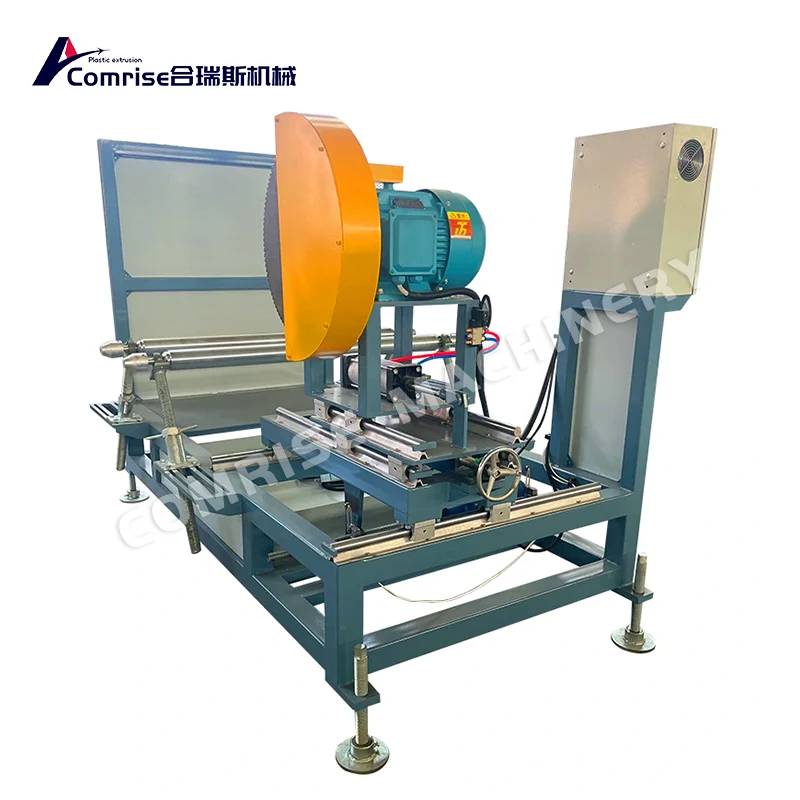
A mechanical punching unit creates outlet holes at the required positions. An encoder controls the hole spacing during continuous production.
6. Traction and Winding
The track-type traction unit maintains a controlled production speed, while the dual-station winding machine collects the finished pipe into coils.
Machine Composition and Characteristics
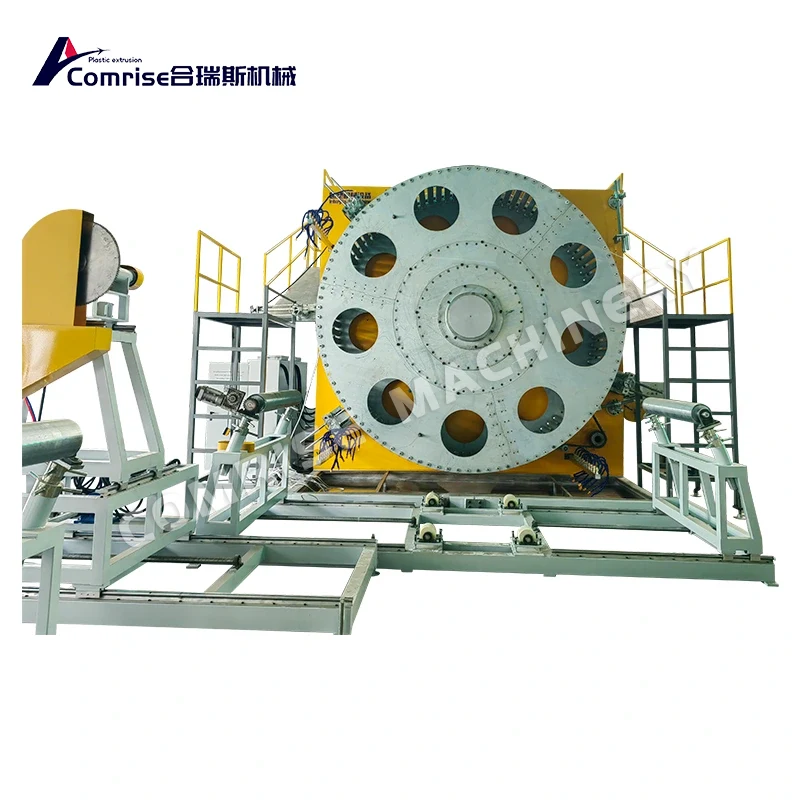
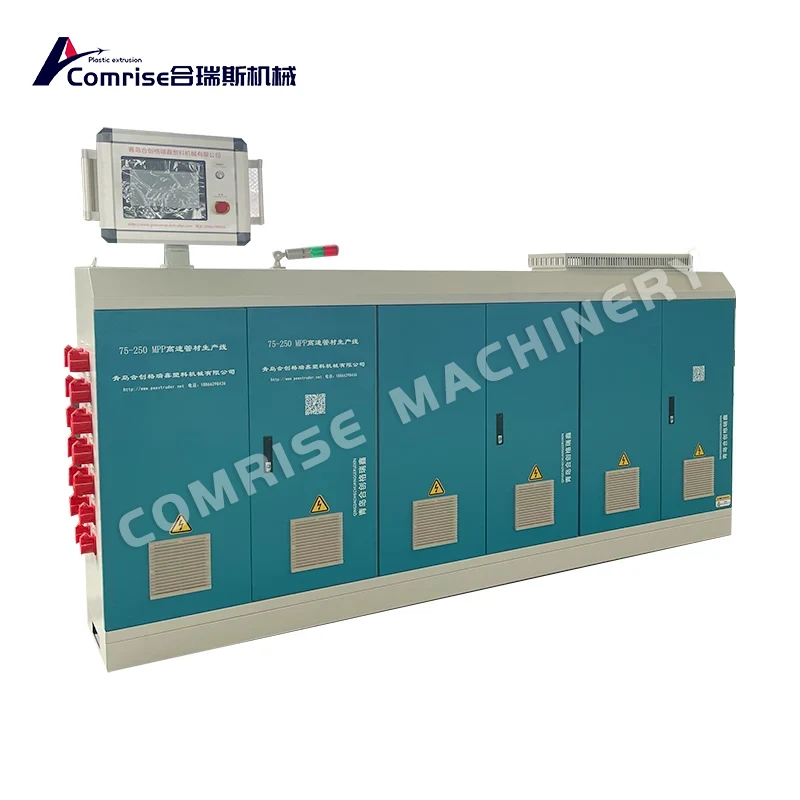
The Labyrinth Drip Irrigation Pipe Machine integrates an extruder, vacuum sizing tank, cooling tank, traction unit, punching unit, and winding machine. PLC control coordinates the main production processes for continuous operation.
Working Principle
PE material is melted and plasticized in the single-screw extruder and formed into a tube through the die head. While the hot tube passes through the forming section, matched rollers and negative pressure shape the pipe and form the internal labyrinth flow channel directly on the tube wall. After cooling and sizing, the pipe is punched at the required outlet positions, then pulled and wound into finished coils. This integrated forming process eliminates separate dripper insertion.
FAQ
How fast can the Labyrinth Drip Irrigation Pipe Machine run?
The reference production speed is 80–120 m/min, depending on pipe specifications, material, and production conditions.
How is the labyrinth flow channel formed?
The labyrinth channel is formed directly during extrusion through matched forming rollers and tooling, without separate dripper insertion.
What pipe sizes can the machine produce?
The machine can be configured for different pipe dimensions according to the required product specifications and tooling.
What factory space is required?
The reference line size is approximately 15 m × 3 m × 3 m. The final layout depends on the equipment configuration.
What is the warranty period?
The standard warranty is 12 months from commissioning, subject to the final sales agreement.